


箸蔵まつかん
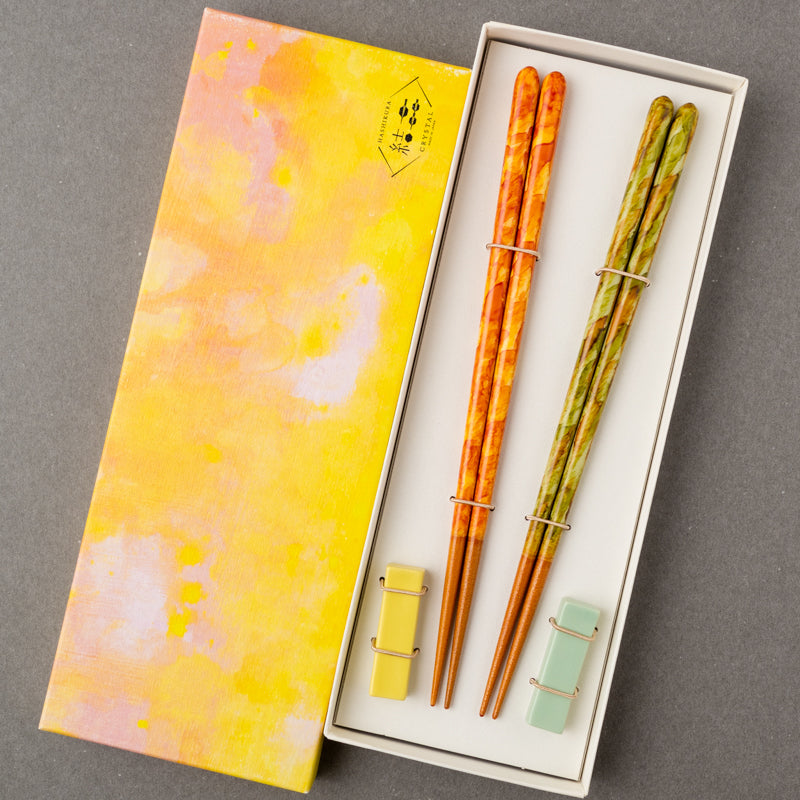
Kessho Saihitsu Spring Mountains / Autumn Leaves, with Matching Chopstick Rests
Kessho Saihitsu Spring Mountains / Autumn Leaves, with Matching Chopstick Rests
Shipping outside Japan
- For delivery outside Japan, please place your order using the "Add to Cart" button on the ZenMarket bar displayed at the bottom of the screen.
- The price shown is the item price in Japanese yen, including tax.
- You will pay international shipping costs, ZenMarket fees and other charges separately on the ZenMarket page.
- We ship your order to ZenMarket's warehouse in Japan, and ZenMarket ships it internationally.
- Customs duties and taxes may apply depending on the destination country.
Couldn't load pickup availability
Product Description
A craftsperson painted each pair of chopsticks with a brush, one pair at a time, with great care.
A colorful gift set that pairs Hasami ware chopstick rests with an original gift box made only for the Kessho series.
Chopsticks
[Dishwasher safe] Yes
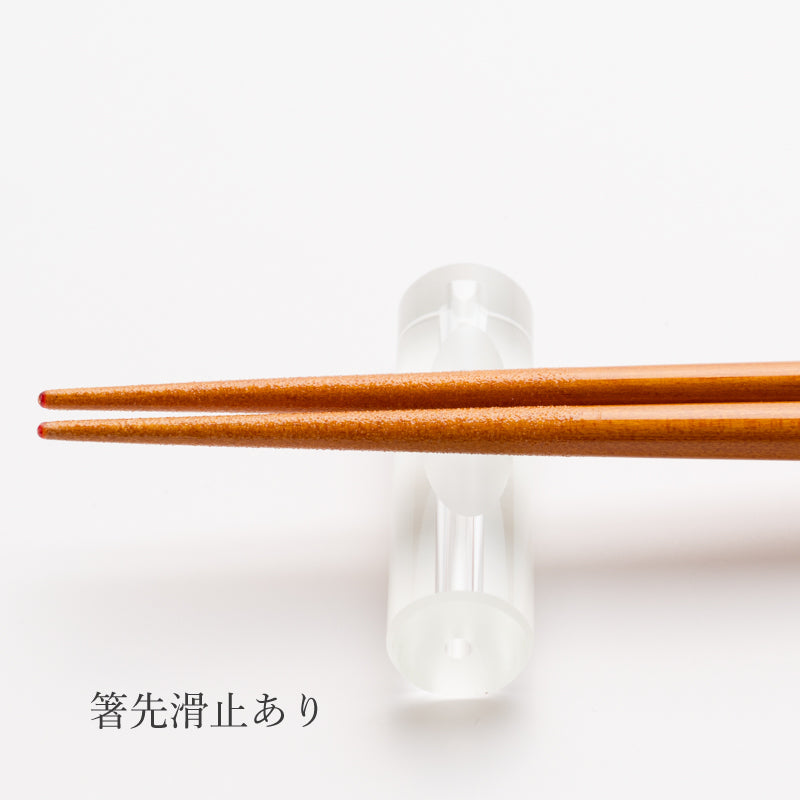
[Non-slip chopstick tips] Yes
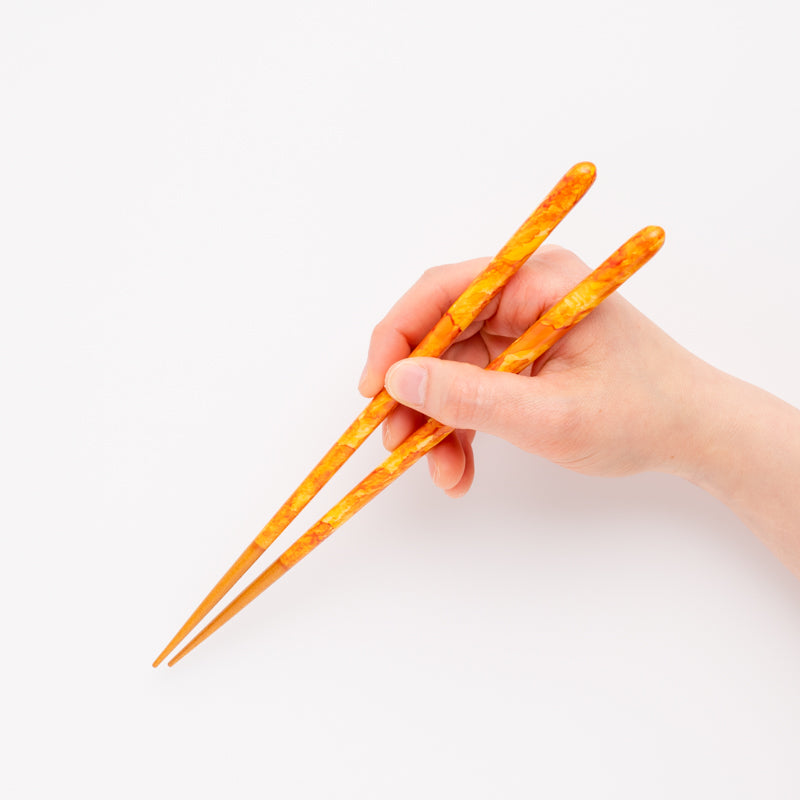
[Size] 22.5 cm (unisex size)
[Material] Natural wood (marus)
[Coating] Polyester urethane resin coating
[Processing] Made in Japan
Chopstick Rest
[Size] 4.5 × 1.3 × H0.9 cm
[Material] Sandstone (Hasami ware)
Product Details

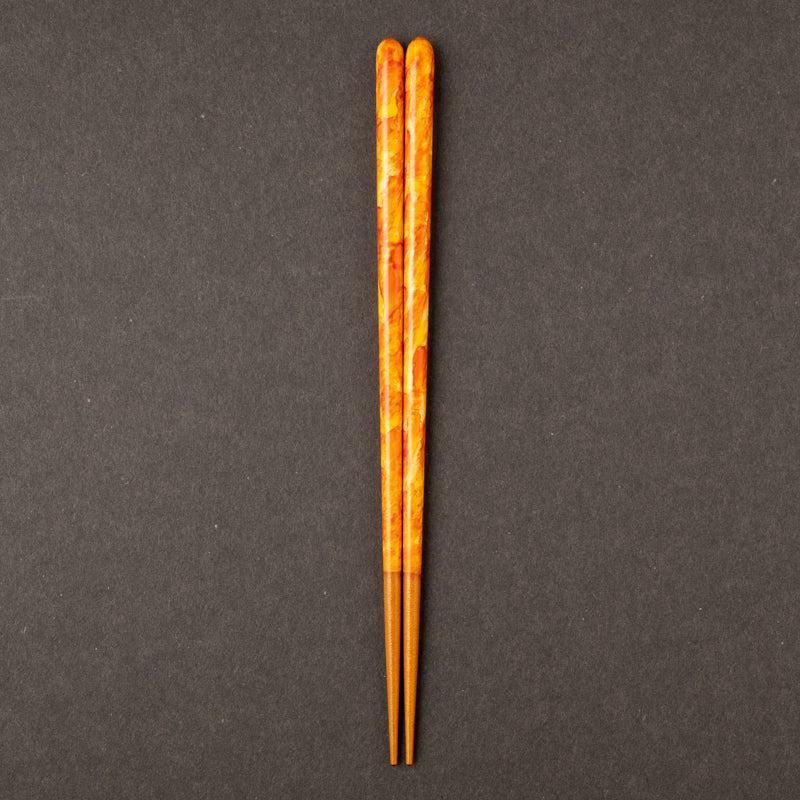
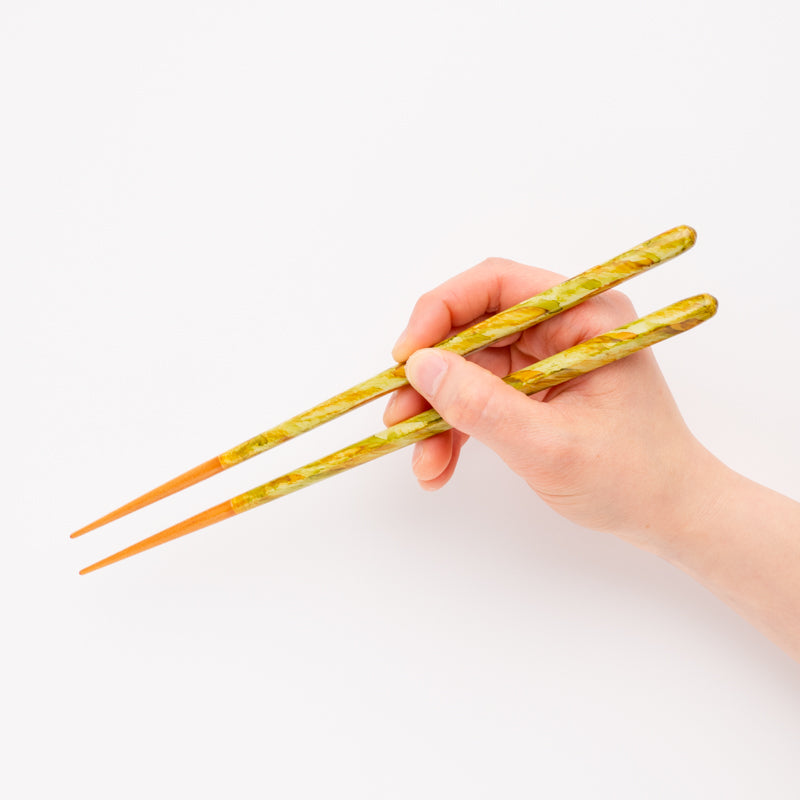
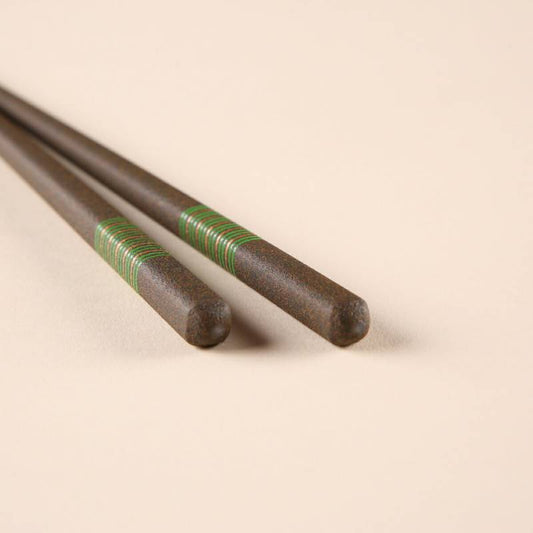
Saihitsu are dishwasher-safe chopsticks that a craftsperson has painted with a brush, one pair at a time, with great care. They have a gentle texture and vividness, like looking at a painting. All of the designs are based on scenery seen from the craftsperson's workshop.
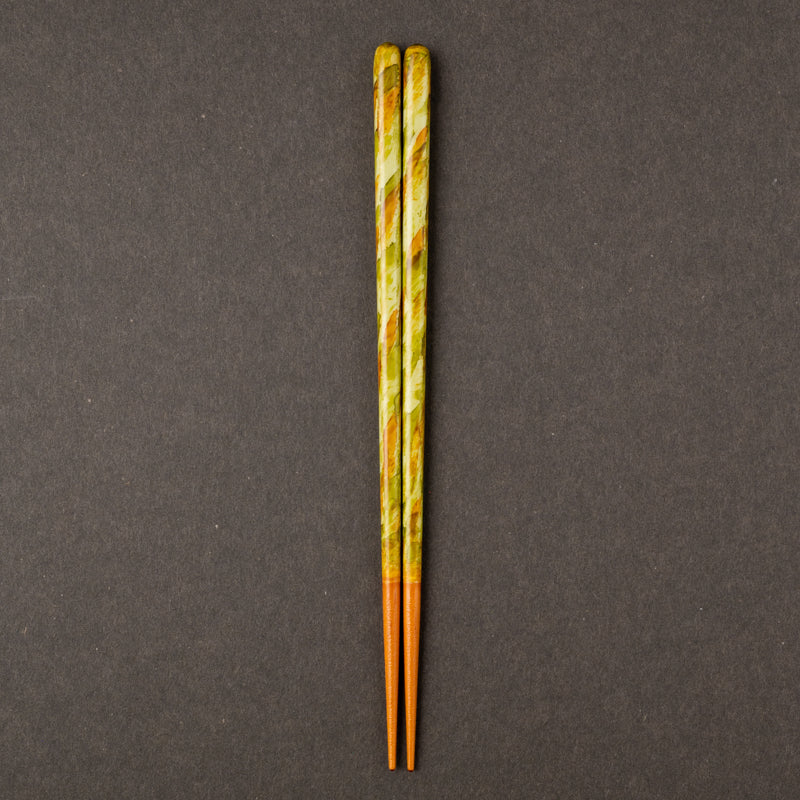
Spring Mountains – Soft green, orange, and yellow tones, like a spring mountain gradually taking on color. Matte finish.
Autumn Leaves – A vivid orange gradation evokes trees in their autumn colors. Matte finish.
Now we would like to introduce how brush-painted chopsticks, including Saihitsu, came to be.
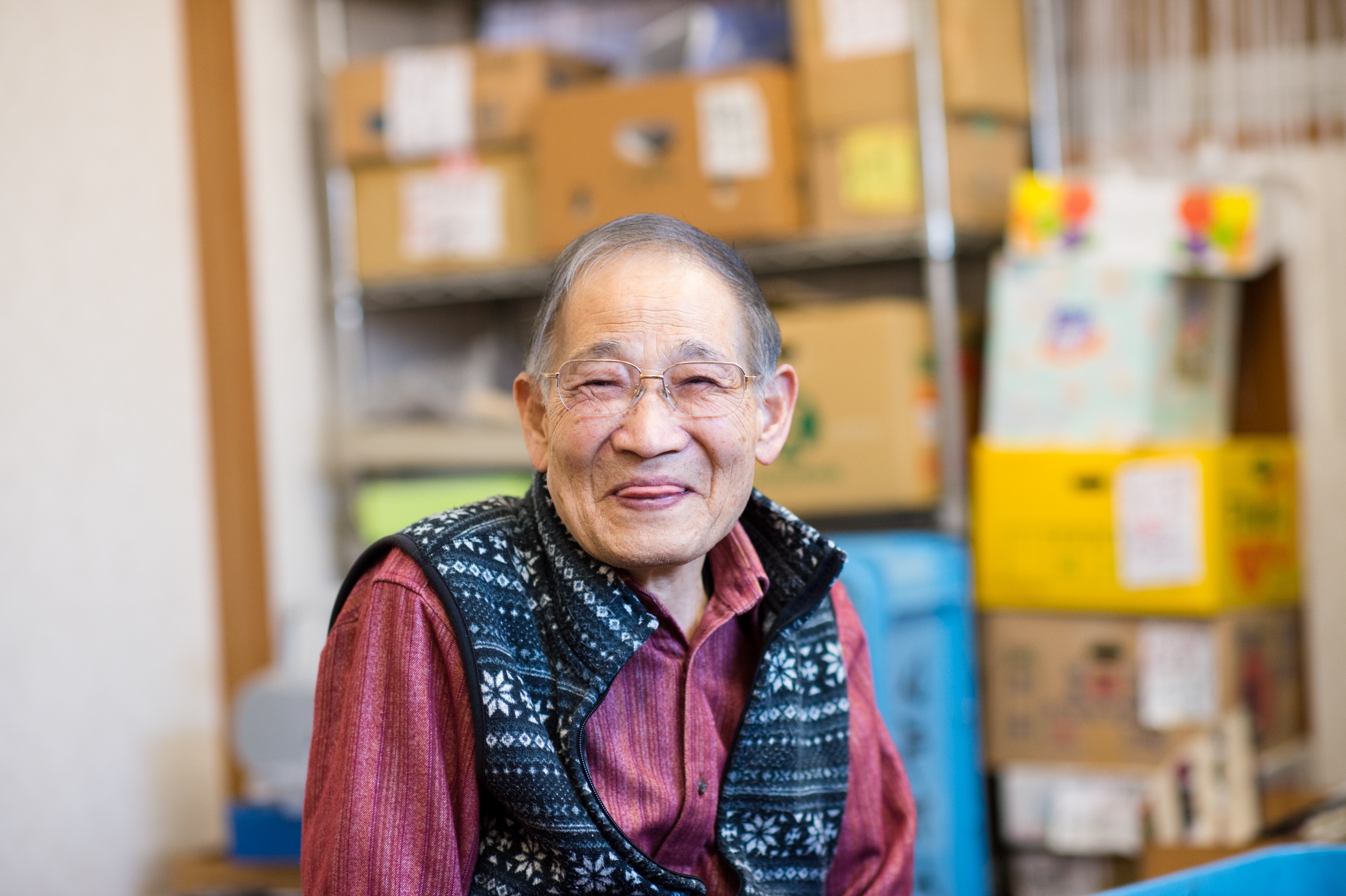
Obama City in Fukui Prefecture is a small town on the Sea of Japan with a population of about 30,000, yet it is a major production center that accounts for 8 out of every 10 lacquered chopsticks in Japan.
Traditional Wakasa lacquered chopsticks, made with the technique of Wakasa lacquerware and its tradition of 400 years, are well known, but there was a maker who was not bound by that framework and expressed free ideas in chopsticks.
He was the lacquered chopstick craftsman Masayoshi Matoba.
Mr. Matoba was born in 1938 (Showa 13). He loved drawing from early childhood, and even though his family was poor, he is said to have painted using leaves as a palette.
At the age of 18 he entered the world of chopstick making, and after mastering the techniques of traditional Wakasa lacquered chopsticks, he became independent. After more than 20 years as a chopstick craftsman, he introduced the technique of “brush painting,” coloring chopsticks with an artist's brush, which had never been part of Wakasa lacquered chopsticks.
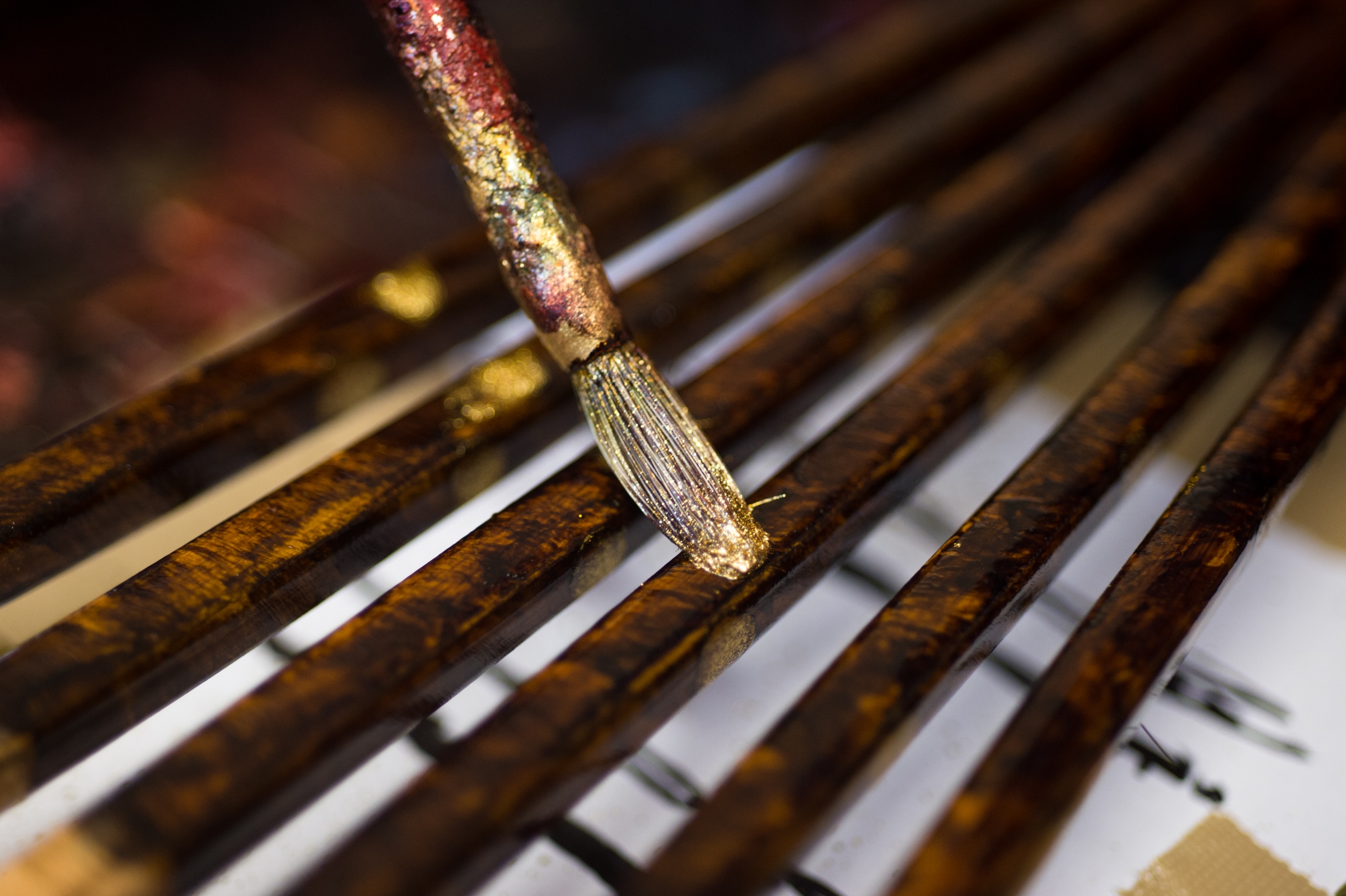
At a time when classic black and red chopsticks were the mainstream, the many colorful chopsticks Mr. Matoba created were all innovative. He sought design hints in things like brooches women wear, clothing, and stage lighting. When a good idea came to him, he would jump out of bed even in the middle of the night and shut himself in his workshop.
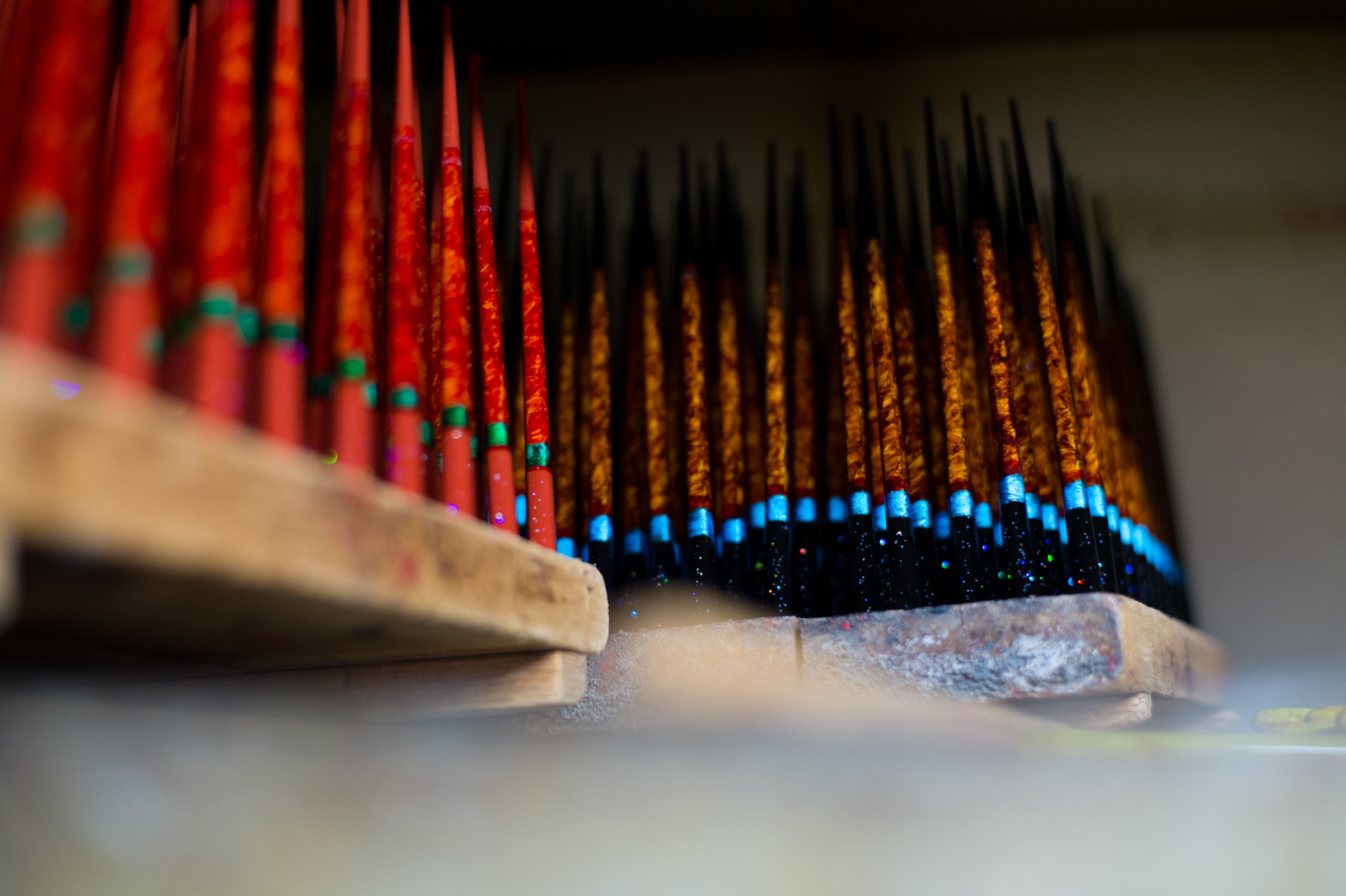
Over a career as a craftsman spanning more than 60 years, he created more than 500 kinds of chopsticks. A chopstick is at most 23 cm long and only 1 cm wide, yet the rich colors that seem ready to burst out of that tiny canvas give us a fresh sense of wonder.
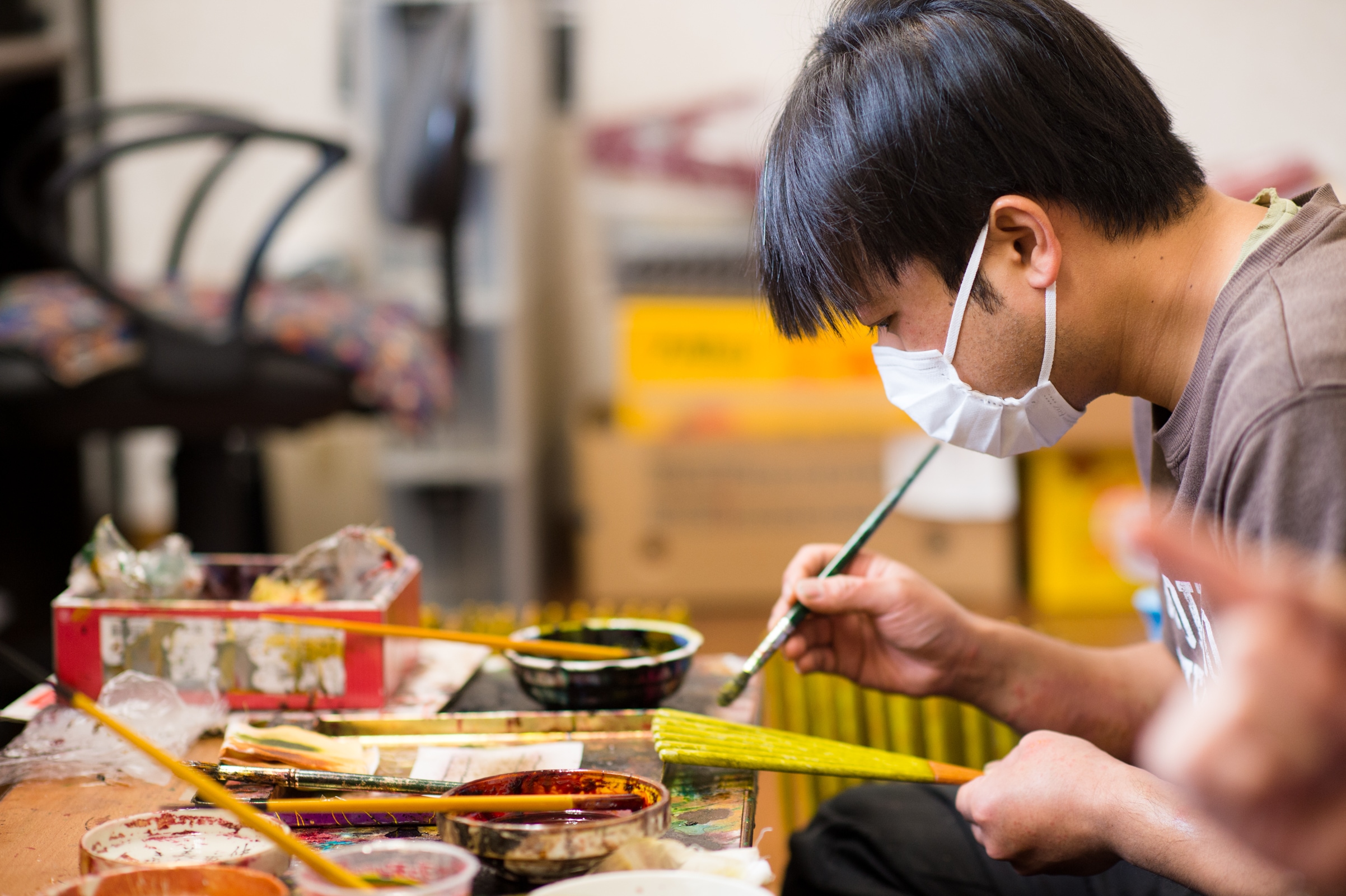
Mr. Matoba passed away in 2019. Today his apprentice, Yuya Fujii, carries on his skills.
Mr. Fujii is from Obama City, a local native.
He had no connection at all to chopsticks or craftsmanship until then, but a curious twist of fate led him to study under Mr. Matoba.
Mr. Fujii was 34 years old at the time. It was by no means a young age at which to start gaining experience as a chopstick craftsman. Quitting the work he had done for many years and leaping into an unknown world must have taken great courage.

Even so, he says that going to Mr. Matoba's workshop was never a burden.
“Mr. Matoba was a lovable person. He didn't seem like a strict craftsman; he was easygoing and laughed often. If it hadn't been Mr. Matoba, I wouldn't have become his apprentice,” he says. When Mr. Fujii talks about Mr. Matoba, his face becomes very gentle, and you can feel Mr. Matoba's character through it.
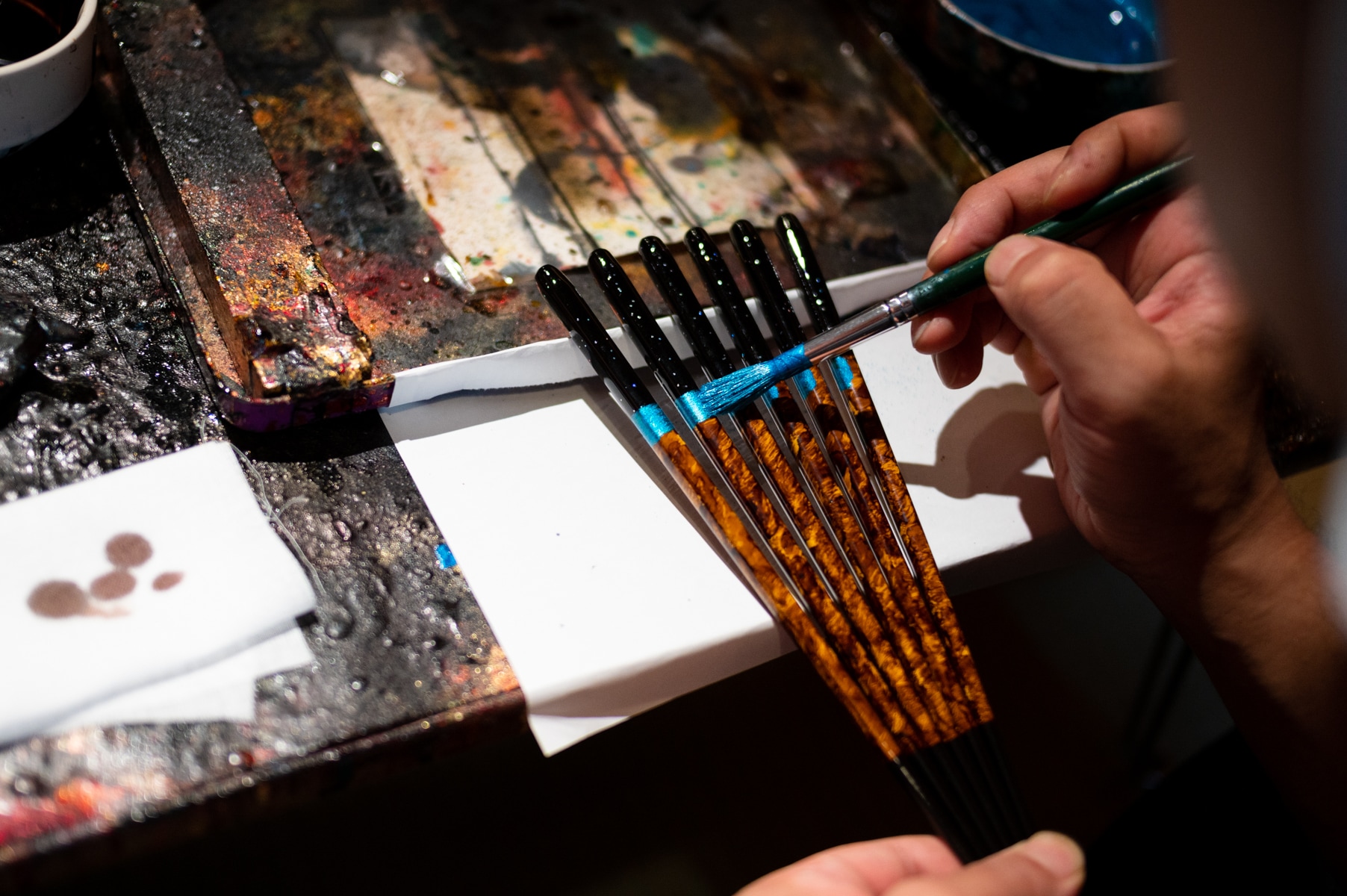
A few months after Mr. Fujii became his apprentice, Mr. Matoba's illness was discovered, and it became clear that he had little time left. From then on, Mr. Matoba spent as much time as his strength allowed in the workshop, trying to pass on everything he could to Mr. Fujii. Mr. Fujii, on the receiving end, was desperate as well.
When asked whether he felt anxious about possibly losing his teacher, he laughs and says, “I was too busy making chopsticks to even think about worrying about the future.”

While teaching Mr. Fujii, Mr. Matoba is said to have remarked, “It's good that Fujii knows nothing about chopsticks. He soaks everything up honestly and quickly.”
Mr. Fujii says he is by no means dexterous, but as you listen to him, you sense delicate consideration everywhere. That careful attention, which puts itself in the user's place, shows in his chopstick making too. Unlike the free-spirited feel of Mr. Matoba's designs, Mr. Fujii's chopsticks convey a delicate atmosphere.
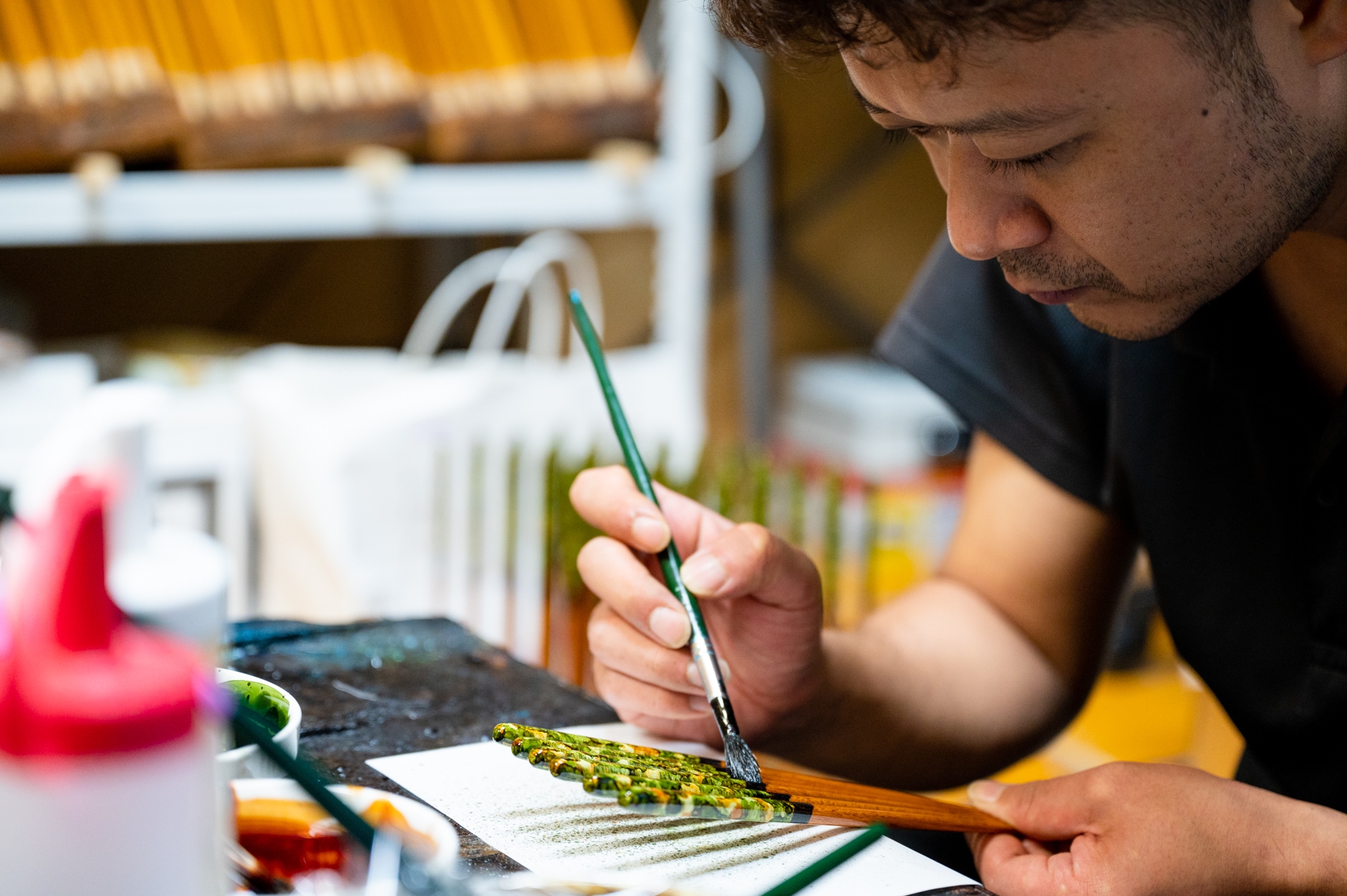
What makes brush-painted chopsticks interesting is that even with the same design, the texture differs slightly depending on the maker. Please enjoy the distinctive character that only handwork can produce at your own table.
[Notes Before Purchasing]
Each item is made by hand, 1 pair at a time. Please note that there are individual differences, such as how the pattern appears and how the glitter is applied.
More from this brand
-
Pair of Hexagonal Hisago Checkered Chopsticks with Sandstone Chopstick Rests, Gift Box Included
Regular price 9,504円Regular priceUnit price per -
Checkered Tsuzure Pair with Sandstone Chopstick Rests, Gift Box Included
Regular price 11,682円Regular priceUnit price per -
Urushi Raden WAKASA Hexagonal 22cm Dishwasher-Safe
Regular price 8,910円Regular priceUnit price per -
Urushi Raden WAKASA Hexagonal 23cm Dishwasher-Safe
Regular price 8,910円Regular priceUnit price per




-
Checkered Tsuzure Pair with Sandstone Chopstick Rests, Gift Box Included
Regular price 11,682円Regular priceUnit price per -
[Domestic Japanese Hinoki] Wooden Freezer Rice Container – Masu Ohitsu COBITSU
Regular price 8,910円Regular priceUnit price per -
Mt. Fuji Premium Glass
Regular price From 19,800円Regular priceUnit price per -
Mt. Fuji Glass
Regular price From 9,900円Regular priceUnit price per


